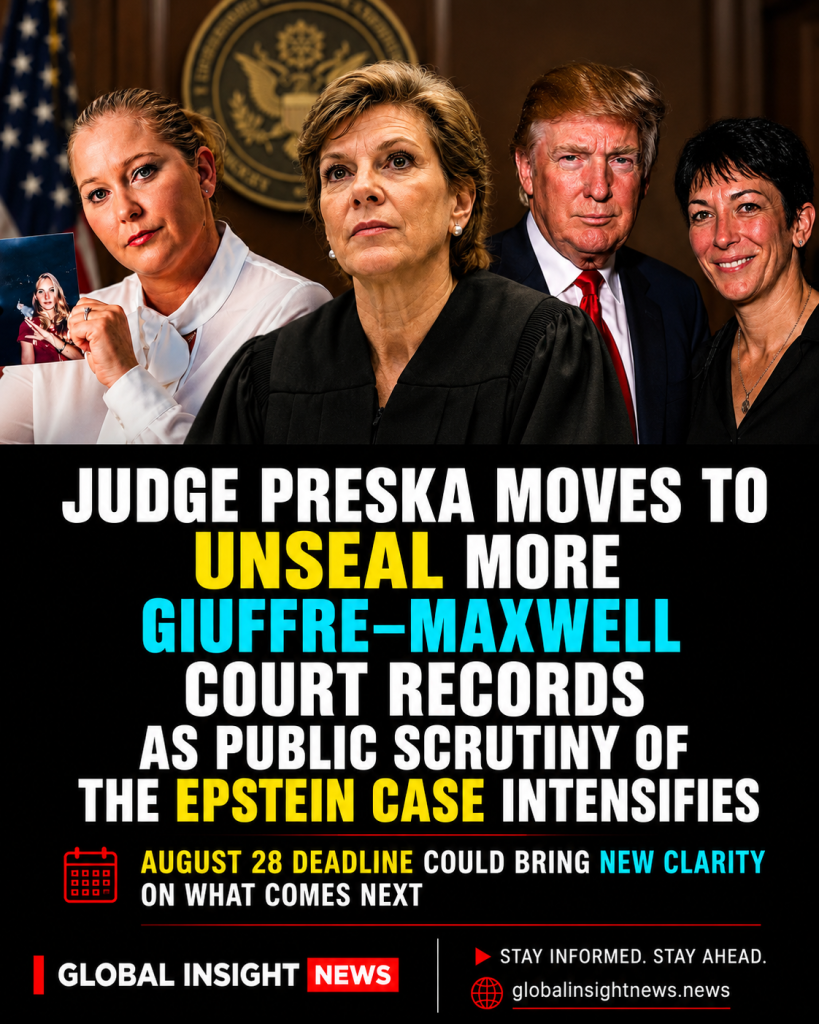
The legal battle between Virginia Giuffre and Ghislaine Maxwell is once again bringing previously sealed court records into the public spotlight.
Giuffre sued Maxwell in 2015, and the case generated a significant amount of evidence, including depositions, exhibits, testimony and other court filings. Some of those materials have remained sealed for years, limiting the public’s ability to see the full record surrounding the case.
Judge Loretta Preska has now cleared the way for additional sealed material connected to the case to move toward possible public disclosure. The development could provide additional context about the evidence, testimony and events examined during the litigation.
But there is an important distinction: August 28 is not necessarily the date the documents will be released. It is the next major deadline for the parties to tell the court how the remaining sealed records should be handled. That means the date could bring more clarity about what may eventually be released, what may remain sealed or redacted, and how the process will move forward.
The significance of these records goes beyond the headlines. Public access to court documents can help provide a clearer picture of what was actually presented in court and separate verified evidence from speculation circulating online.
At the same time, the documents must be examined carefully and responsibly. A person being named or mentioned in a court record does not automatically mean that person committed a crime or engaged in wrongdoing. The evidence and the context surrounding each document matter.
As renewed attention turns toward the so-called Epstein Files, the central issue should remain transparency, accountability and justice for survivors — while allowing the evidence itself to speak.
Justice for survivors. Release the truth.
Leave a Reply